The Exposure Is Already Built Into the Job
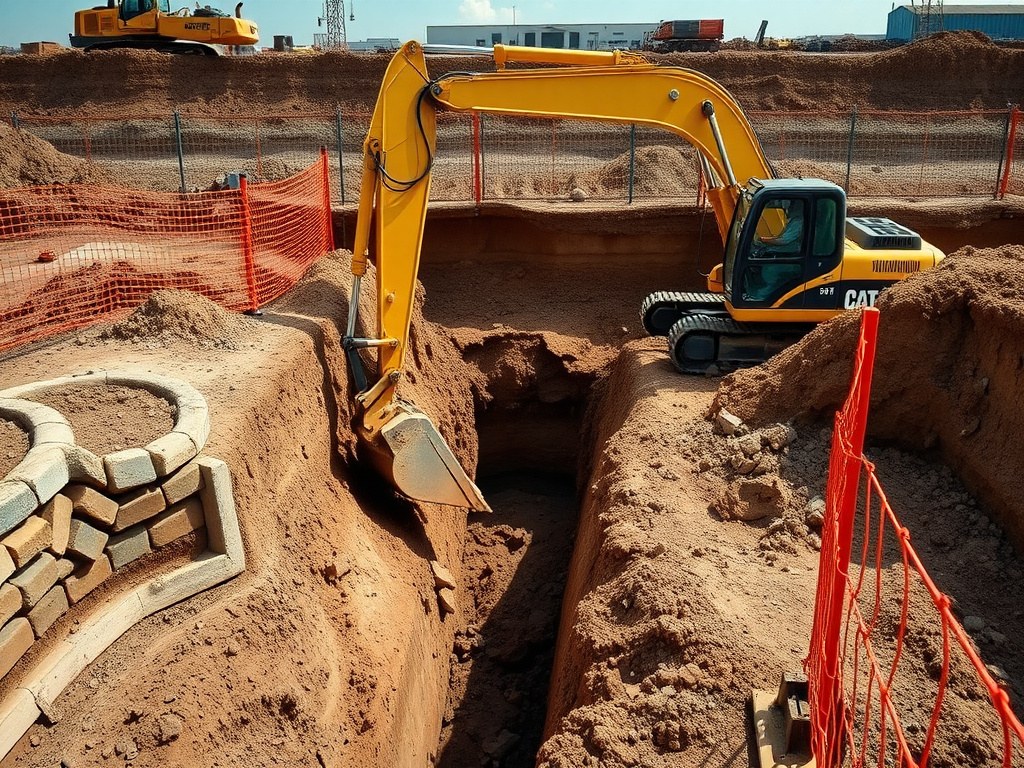
Excavation and earthwork contracting has a risk profile most trades don't share: you're digging into ground conditions you can't fully verify in advance. Even with a Phase I environmental assessment on file, buried fuel tanks, old drums, contaminated fill dirt, and impacted groundwater turn up regularly on sites with any prior industrial, agricultural, or dumping history — and once your equipment disturbs one of them, you're dealing with a pollution condition, not just a schedule delay.
Common Ways Excavation Work Triggers a Pollution Claim
- Excavation equipment strikes a buried fuel tank or line, releasing product into soil or groundwater
- Grading uncovers contaminated fill dirt that has to be tested and disposed of as hazardous material
- Dewatering operations discharge contaminated groundwater to a storm drain or an adjacent property
- Diesel or hydraulic fluid leaks from heavy equipment during normal operations
- Runoff or dust from disturbed soil affects a neighboring property or nearby water source
None of these require negligence in the traditional sense — they can happen on a well-run job with an experienced crew. That's exactly why insurance, not just careful operations, is the right control for this risk.
Why Your CGL Policy Won't Respond
If you carry commercial general liability and assume it has you covered here, it's worth confirming that assumption directly with your policy. Standard CGL forms carry a total pollution exclusion, which removes coverage for bodily injury, property damage, and cleanup costs tied to a pollution condition — including exactly the scenarios listed above. This exclusion applies regardless of how the contamination happened, which means an honest, unavoidable discovery during routine digging gets treated the same as anything else under the exclusion: not covered.
What Contractors Pollution Liability Covers Instead
A CPL policy built for excavation and earthwork contractors typically responds to:
- Third-party bodily injury arising from a pollution condition caused by your operations
- Third-party property damage, including diminished property value claims
- Cleanup and remediation costs ordered by a regulatory agency
- Legal defense costs tied to the claim or any related regulatory action
Project-Specific or Annual — Which Fits Your Business
If pollution exposure is occasional for you — a single job on a site with a known environmental history, for example — a project-specific policy scoped to that job is usually the more cost-effective route. If soil disturbance is a routine part of your operations across most of your contracts, an annual practice policy covering all of your jobs over a 12-month period is typically the better fit, since it avoids buying a new policy for every project.
Increasingly a Contract Requirement, Not Just a Good Idea
Beyond the direct financial protection, proof of CPL coverage is increasingly something general contractors, land owners, and permitting authorities specifically ask for before excavation work begins on a site with any environmental uncertainty. Carrying it isn't just about protecting your business after an incident — it's often the difference between winning and losing a bid.
If your excavation company doesn't currently carry a pollution-specific policy, the right next step is a direct conversation about your typical site conditions, contract requirements, and whether a project-specific or practice policy makes more sense for how you operate.